
Glasses and contacts can be part of life for years, so it is easy to forget how many small routines are built around them. You reach for glasses before checking your phone. You pack contact lens solution for a weekend away. You deal with fogged lenses, dry contacts, or the stress of realizing you forgot backup eyewear.
Dr. Steven J. Dell, from Dell Laser Consultants, notes that people searching for LASIK eye surgery in Austin are often thinking about more than clearer vision. They are thinking about daily convenience, comfort, exercise, travel, and whether vision correction could make ordinary routines feel simpler.
Laser vision correction can offer meaningful lifestyle benefits for the right candidate. It is not a guarantee of perfect vision forever, and it does not replace the need for healthy expectations or follow-up care. But for many people, reducing dependence on glasses or contacts can make everyday routines feel easier.
Mornings may feel less complicated
One of the most relatable benefits of laser vision correction is also one of the simplest: waking up and seeing more clearly without immediately reaching for glasses or contacts.
That can matter more than it sounds. Morning routines often happen quickly. People check messages, get ready for work, make breakfast, help children, walk the dog, apply skincare, do makeup, or head straight into a busy day. When glasses or contacts are part of every step, they can become one more thing to manage.
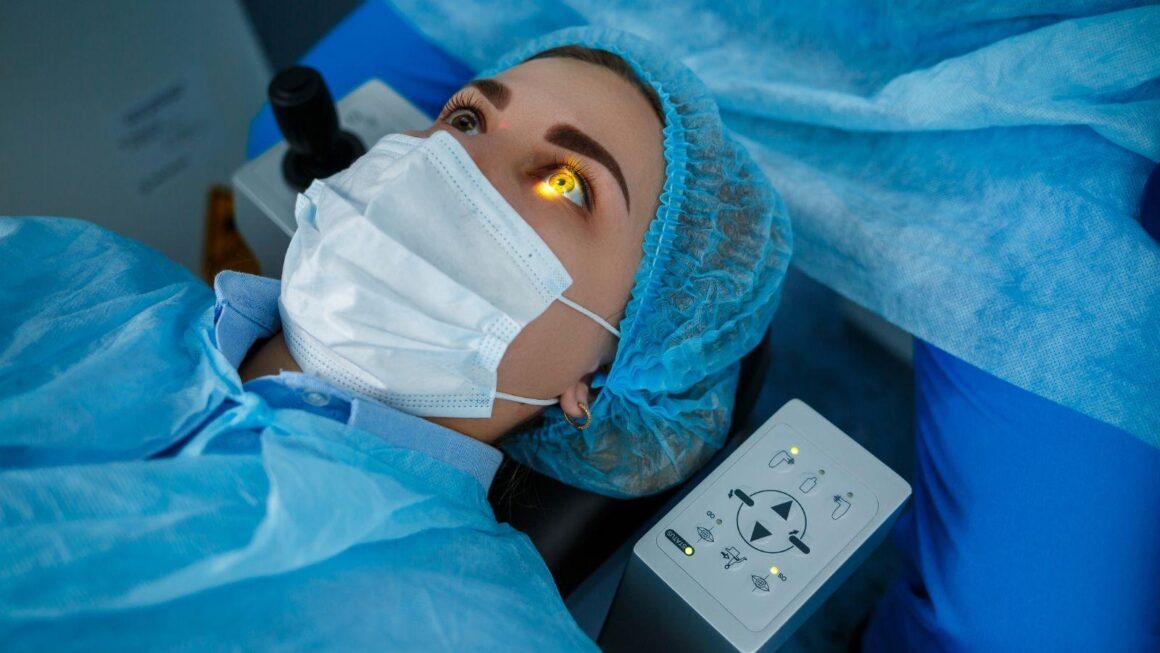
Laser vision correction procedures, including LASIK, reshape the cornea so light focuses more accurately on the retina. The American Academy of Ophthalmology explains that LASIK is used to treat common refractive errors such as nearsightedness, farsightedness, and astigmatism.
The lifestyle change is not only about the eye chart. It can be about fewer small interruptions. No searching for glasses on the nightstand. No waiting for contacts to settle. No switching between prescription sunglasses and regular glasses before leaving the house.
For people who wear makeup, the morning difference can be especially noticeable. Contacts may feel dry after long wear, and glasses can affect how eye makeup looks or feels throughout the day. Reducing dependence on them may make getting ready feel more direct. It is not a beauty treatment, but it can affect the way a daily routine feels.
Still, the first days after surgery are different from the long-term routine. The FDA notes that after LASIK, vision may be hazy or blurry right away, and the eye may burn, itch, water, or feel uncomfortable during early healing. That is why patients need to follow the surgeon’s instructions instead of judging the outcome by the first few hours.
Exercise and travel can become easier to manage
People often think about laser vision correction when glasses or contacts start getting in the way of an active routine.
Exercise is a common example. Glasses can slip during a workout, fog during outdoor runs, or feel awkward under helmets and protective gear. Contacts can dry out during long sessions. Swimming, dust, sweat, or wind can also make contact lens wear more complicated or uncomfortable.
Clearer unaided vision may make certain activities feel easier to manage. Running, hiking, yoga, cycling, gym workouts, and casual sports can all feel less complicated when eyewear is not part of the setup. It may also make spontaneous activities feel easier because you are not thinking through whether you packed the right glasses, contacts, drops, or backup case.
Travel is another area where the lifestyle benefits can feel very practical. Contact lens wearers know the packing list: solution, case, rewetting drops, backup lenses, glasses, sunglasses, and sometimes extra supplies in case luggage is delayed. Glasses wearers may need prescription sunglasses, cleaning cloths, and a backup pair.
Reducing dependence on glasses or contacts can simplify that. It may make red-eye flights, beach trips, destination weddings, outdoor adventures, and work travel easier to navigate. Fewer supplies mean fewer chances to forget something important.
Driving can also be part of the conversation, especially for people who rely on glasses to meet vision requirements or who struggle with contacts drying out during long days. However, night driving deserves a realistic discussion. The FDA warns that some patients develop glare, halos, double vision, or reduced low-contrast vision after LASIK, and these symptoms can affect nighttime vision.
That does not mean every patient will have major night-vision problems. It does mean the possibility should be discussed before surgery, especially for people who often drive at night or work in low-light environments.
Dry eye, healing, and follow-up care still matter
Laser vision correction is often described in terms of freedom and convenience. That is understandable, but the health side still matters.
Dry eye is one of the most important topics to discuss before surgery. The FDA says LASIK can cause dry eye symptoms, and people who already have severe dry eye may not be good candidates. A careful evaluation should look at tear film, eye surface health, contact lens tolerance, medications, and any history of irritation.
This matters because dry eye can affect both comfort and visual quality. Someone may technically see well on a chart but still feel bothered by burning, fluctuating vision, or irritation if the surface of the eye is not healthy. People who spend long hours on screens may already blink less often during the day, which can make dryness more noticeable.
Healing also takes time. The American Academy of Ophthalmology notes that vision is often stable and clear by about six months after laser surgery, although the exact recovery timeline can vary. Many people notice improvement much sooner, but stable healing is a process, not a single moment.
Follow-up care helps make that process safer. Patients may need medicated drops, artificial tears, activity restrictions, and scheduled exams. They may also be told to avoid rubbing the eyes, swimming, certain cosmetics, or dusty environments during early recovery, depending on the surgeon’s instructions.
This is where realistic lifestyle planning helps. If you have an important trip, wedding, athletic event, or heavy work deadline coming up, timing matters. It may be better to plan surgery when you can rest, attend follow-up appointments, and avoid pushing your eyes too hard right away.
Laser vision correction may reduce dependence on glasses or contacts, but it is still surgery. Recovery works best when patients take those instructions seriously.
Why realistic expectations are part of a good outcome
The best outcomes usually start with a clear understanding of what the procedure can and cannot do.
Laser vision correction may reduce or eliminate the need for glasses or contacts for many daily activities. It can make mornings simpler, workouts easier, and travel less dependent on eye supplies. Those benefits can be meaningful.
But it does not stop the normal aging of the eyes. People who have laser vision correction when they are younger may still need reading glasses later because of presbyopia, the age-related loss of near focusing ability. It also does not prevent cataracts, glaucoma, macular degeneration, or other eye diseases. Routine eye exams still matter.
Candidacy is also individual. LASIK is not the only option, and it is not right for everyone. Some people may be better suited to PRK, SMILE, EVO ICL, refractive lens exchange, or no procedure at all. The right choice depends on factors such as prescription, corneal thickness, age, dry eye status, eye health, and personal goals.
That is why consultation quality matters. A good evaluation should not feel like a quick approval. It should include measurements, eye health testing, a discussion of risks and benefits, and time for questions. Patients should understand possible side effects, healing expectations, and whether their lifestyle makes one option more sensible than another.
At Dell Laser Consultants in Austin, the practice offers multiple vision correction options, including LASIK and PRK, ZEISS SMILE PRO, EVO ICL, and refractive lens exchange, along with dry eye diagnostics, cataract care, corneal cross-linking, and glaucoma services. That broader range matters because not every patient fits neatly into one procedure type.
For readers considering laser vision correction, the most useful first step is to look honestly at daily life. Are glasses or contacts a minor inconvenience, or do they regularly affect work, fitness, travel, comfort, or confidence? Are the eyes healthy enough for surgery? Are the expected benefits worth the recovery and possible risks?
Laser vision correction can make daily life feel easier for the right person. The key is deciding with clear information, healthy eyes, and expectations that match real life.