
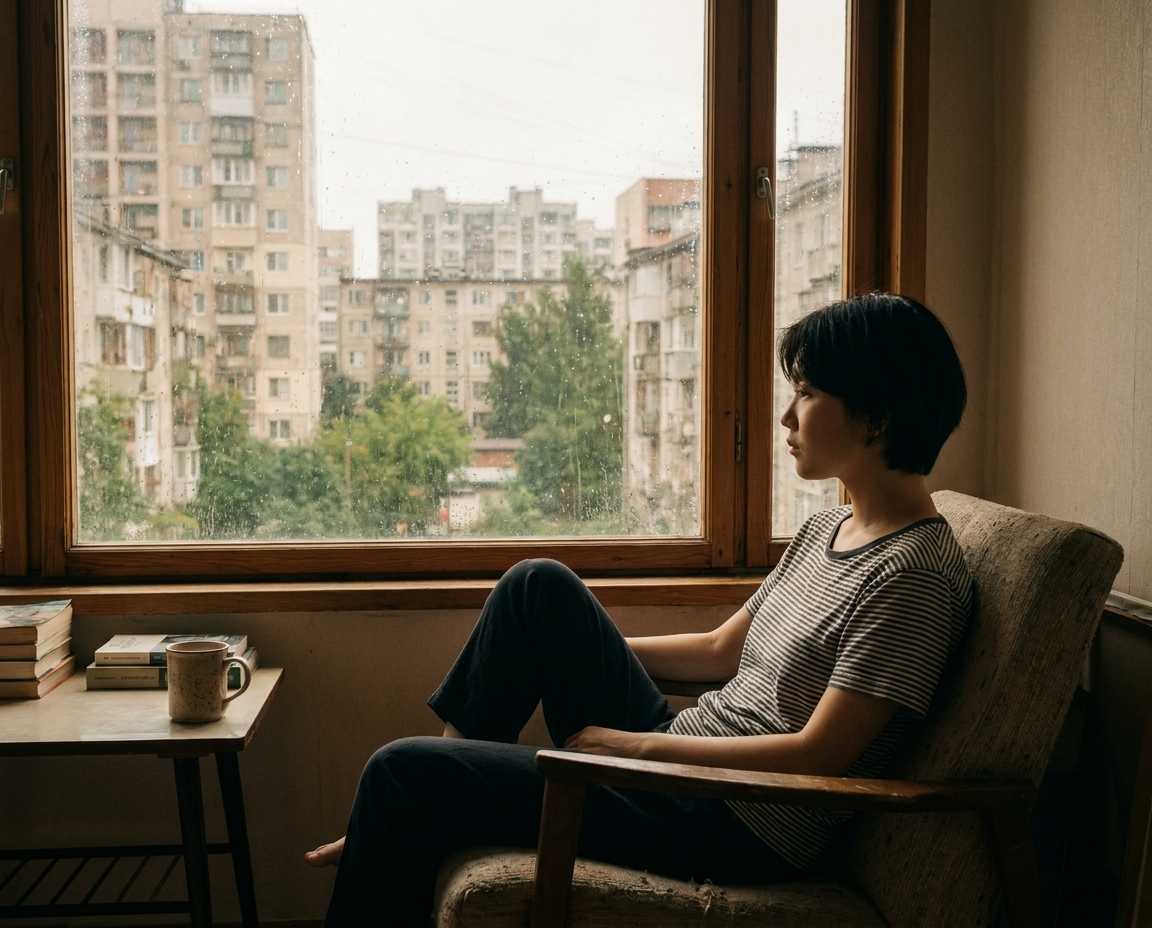
Nobody talks about their marriage when they go to the doctor. They talk about sleep. Fatigue. The tension headaches that keep coming back. The fact that they have not felt quite like themselves in months. What often goes unexamined is what is happening at home, and whether the relationship they return to every evening might have something to do with how they are feeling.
This is not a comfortable thought. But it is a worth sitting with.
Your Body Keeps Score at Home Too
Stress research has spent decades documenting what prolonged stress does to the body. It disrupts sleep. It affects digestion, concentration, immune response, and mood. Most people understand this in the context of work pressure or financial strain. What gets less attention is the stress that lives inside a struggling marriage.
The particular difficulty with relationship stress is that it does not clock off. Work pressure, at least in theory, ends when you leave the office. But when you are carrying tension with the person you share a home with, it comes with you everywhere. It is there when you wake up. It sits quietly in the background during the working day. It is there again at night.
People in difficult marriages often describe something that is hard to name precisely. Not a crisis, exactly. More like a persistent low-level heaviness. Sleep gets lighter. Appetite changes. Small frustrations feel disproportionately large. Enjoyment of things that once felt easy starts to thin out. And because it builds so gradually, most people adapt to it without fully realising they have.
The Habit of Waiting
Most couples who eventually seek support will tell you, almost without exception, that they waited too long. Not because they did not care about the relationship. Often it is the opposite. They cared enough to keep trying on their own, to give it more time, to hope the difficult season would pass naturally.
Sometimes it does. But the patterns that create distance between two people tend to be self-reinforcing. The less connected a couple feels, the harder genuine communication becomes. The harder communication becomes, the more entrenched the distance grows. Time alone rarely interrupts that cycle. It mostly just allows it to continue.
There is also something worth naming about what prolonged relationship stress does before it reaches a crisis point. The body absorbs it quietly and consistently. Sleep suffers first, usually. Then energy. Then the general sense of ease that most people only notice once it has gone.
What Counselling Actually Does
The version of marriage counselling that lives in popular imagination, two people sitting stiffly while a therapist assigns fault, bears very little resemblance to what actually happens in a good counselling room.
What it actually involves is a trained counsellor helping both partners slow down enough to hear each other properly, often for the first time in a long while. Not to perform understanding, but to actually arrive at it. Underneath most relationship difficulties, there are unmet needs, old hurts, and communication patterns that made sense once but have since started working against both people. A skilled counsellor helps a couple see those things clearly, and begin to work with them rather than around them.
It is not a quick fix, and it is not meant to be. Sessions are usually held weekly or fortnightly, and the process builds over time. What shifts first is often small. A conversation that goes differently. A moment of actually feeling heard. Then, gradually, something more.
The Case for Going Earlier Rather Than Later
Research published in the Journal of Marital and Family Therapy has found that couples therapy leads to meaningful improvements in relationship satisfaction for around 70 to 80% of couples who engage in it. The outcomes tend to be stronger when couples come earlier, before difficulties have had years to compound into something heavier.
From a health perspective, this matters more than people realise. Relationship stress that is addressed does not just improve the relationship. It removes a sustained source of physical and emotional strain from daily life. People sleep better. They feel more present. The background noise that had become so familiar it almost felt normal begins, slowly, to quieten.
That is not a side benefit. For many people, it is the thing that changes everything else.
Signs It Might Be Time
There is no single clear signal that it is time to reach out. Most couples do not arrive at a neat moment of realisation. What tends to happen instead is a slow accumulation. The same conversation cycling back to the same unresolved place. A growing sense of disconnection that neither partner quite knows how to address. Unspoken hurt that has been sitting between two people long enough that it has started to feel permanent.
If your relationship is affecting how you sleep, how you feel during the day, or your general sense of ease in your own life, that is worth paying attention to. Not as a sign that something is broken, but as a signal that something needs care.
Finding the Right Support in Singapore
For couples in Singapore considering this step, it is worth looking for a practice where counsellors hold recognised professional qualifications and are registered with a body such as the Singapore Association for Counselling. That kind of registration signals a genuine commitment to professional ethics and ongoing standards of care.
A good practice will also take the time to speak with you before sessions begin. That initial conversation, where you can share what you are going through and get a sense of how the counsellor works, matters more than people expect. The fit between a couple and their counsellor is one of the strongest predictors of how much the process is able to help.
If you are ready to get help for marriage counselling in Singapore, that first call is often where things begin to shift. It takes very little time. And for a lot of couples, it turns out to be the most important conversation they have had in years.