Most keto onion ring recipes have the same problem. The coating falls off halfway through cooking, the texture goes soggy within minutes, and the whole thing tastes more like a science experiment than a snack. It’s frustrating, especially when all you wanted was something crispy to dip in ranch.
The good news? The fix isn’t a complicated recipe with 14 specialty ingredients. It comes down to understanding what makes a coating stick, which flour-free coating options actually crisp up, and a couple of small prep steps that most recipes skip entirely. Get those three things right and you’ve got rings that hold their crunch from the fryer to the plate.
A solid keto onion rings recipe starts with one decision: what’s going in the breading? The traditional breadcrumb route is off the table on keto, obviously, but the replacements available now are better than they were even a few years ago. Pork rinds and almond flour do most of the heavy lifting, and when you combine them the right way, the result is a crispy low-carb layer that honestly rivals the original.
Why Traditional Coatings Don’t Work on Keto
Regular onion rings rely on wheat flour and breadcrumbs for structure. Those ingredients absorb oil, puff up during frying, and create that classic golden shell. They also pack anywhere from 15 to 25 grams of net carbs per serving, which can knock you out of ketosis before you’ve finished your second ring.
- Wheat flour acts as a binder and a crisping agent simultaneously. On keto, you need to split that job between two or more ingredients because no single grain-free crust does both.
- Breadcrumbs provide the crunch factor. Without them, you get a flat, dense exterior that doesn’t have that satisfying snap. That’s where pork rinds come in as a carb-free crumb replacement, offering texture without the blood sugar spike.
- Cornstarch, which shows up in a lot of beer batter recipes, is another hidden carb bomb. A single tablespoon has about 7 grams of net carbs. It adds up fast when you’re coating a full batch of rings.
The Crumb Ratio Method
Not all keto-safe batters are created equal. Pork rinds on their own can taste a bit one-note and sometimes get greasy. Almond flour alone tends to burn before it crisps. The trick is mixing them.
- A 60/40 ratio of crushed pork rinds to almond flour gives you the best balance. The pork rinds bring the crunch and the protein, while the almond flour adds body and helps the coating brown evenly without scorching.
- Grind the pork rinds finer than you think you need to. Chunky crumbs look cool in photos, but they don’t adhere well. A food processor pulsed for about 10 seconds gets you to that sweet spot where the crumb is fine enough to stick but still has texture.
- Season the crumb mix before you start dipping. Garlic powder, paprika, a pinch of cayenne, and some salt go directly into the dry mixture. This way, every ring gets consistent flavor instead of that patchy seasoning you get from sprinkling after frying.
- Some people add grated parmesan to the crumb blend. It works, but know that it changes the flavor profile and adds a small amount of saturated fat. If you’re tracking macros closely, a tablespoon of parmesan adds about 1.4 grams of fat and negligible carbs, so it’s a reasonable addition.
The Double-Dip Seal
The number one complaint with keto onion rings is the coating sliding off during cooking. This happens because the keto-safe batter doesn’t have gluten to act as a glue.
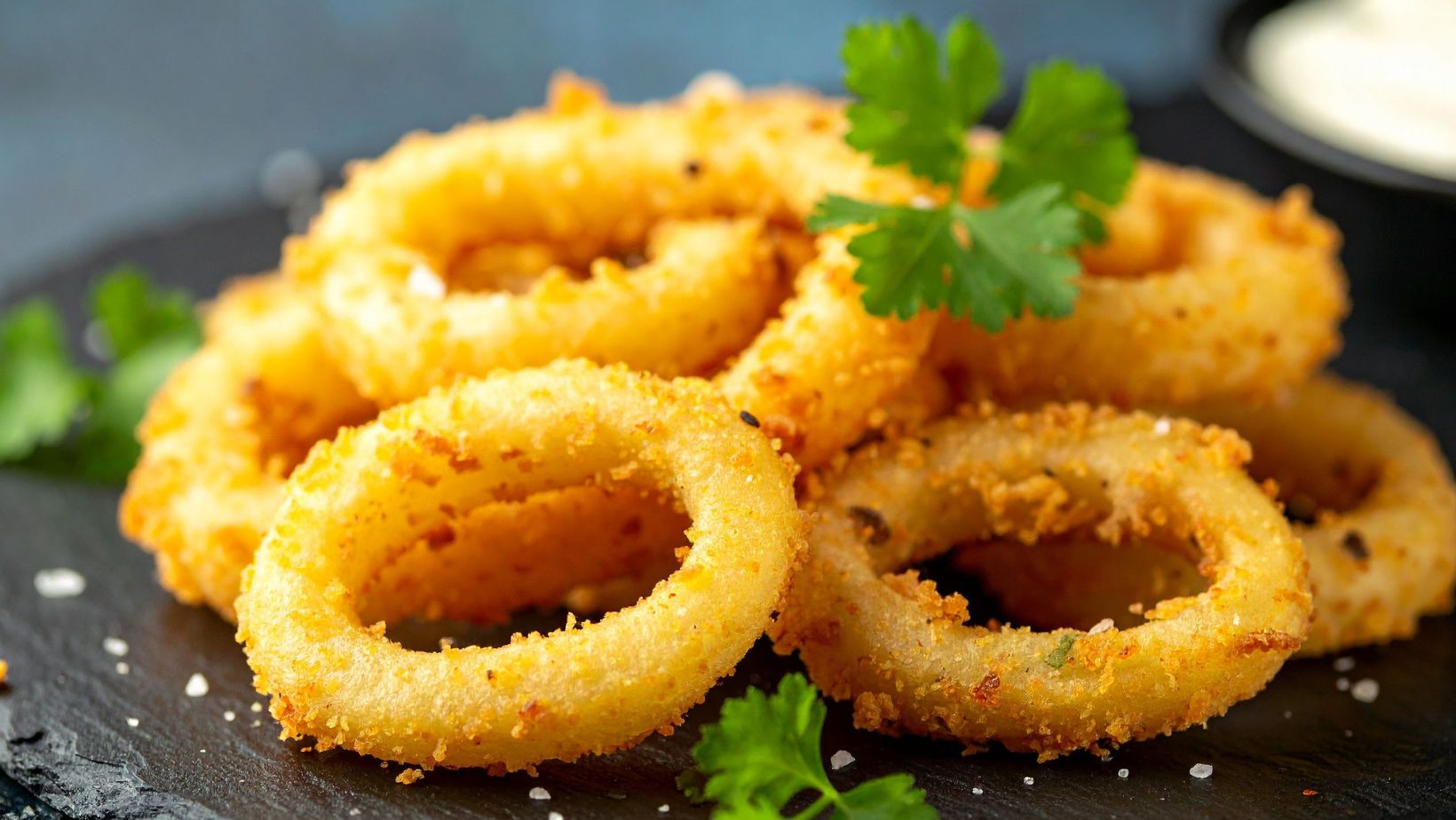
You have to create adhesion manually, and the double-dip method handles that.
- Dip the onion ring in beaten egg first. Then dredge it through your crumb mix. Then dip it in egg again. Then back through the crumbs one more time. Two layers of egg wash and two layers of grain-free crust create a seal that stays put.
- Let the coated rings rest on a wire rack for about 5 minutes before frying. This short rest allows the egg to set slightly, which bonds the flour-free coating to the onion more firmly. Skip this step and you’ll watch your breading float off in the oil.
- Use one hand for the wet dip and the other for the dry dip. It sounds like basic kitchen advice, but it prevents the clumpy buildup that happens when wet and dry ingredients mix on your fingers. That clumping wastes your crunchy breading swap and makes the coating uneven.
The Onion Soak Trick
Raw onions have a sharpness that can overpower the coating flavor, especially thick-cut rings. They also release moisture during cooking, which creates steam under the crispy low-carb layer and causes it to separate.
- Soak your onion rings in ice water for 15 to 20 minutes before coating. This pulls out some of the harsh sulfur compounds that give raw onions their bite, and it firms up the rings so they hold their shape better during frying. According to the USDA’s FoodData Central, a medium onion has about 7 grams of net carbs, so portion accordingly if you’re tracking strictly.
- Pat each ring completely dry after soaking. Any residual water on the surface will prevent the egg wash from sticking, and you’ll be right back to the sliding-coating problem. Paper towels work, but a clean kitchen towel is more thorough.
- Choose sweet onions or Vidalia onions over white or yellow if you can find them. They have a milder flavor and slightly higher sugar content, but the difference in net carbs is minimal, roughly half a gram more per ring. The payoff in taste is worth it. They also tend to soften more evenly during cooking, which gives you that melt-in-your-mouth center with a guilt-free crunch on the outside.
Cooking Methods That Actually Work
You’ve got three options here, and each one has trade-offs worth knowing.
- Deep frying in coconut oil or avocado oil gives the most consistent results. Coconut oil has a high smoke point and adds a subtle richness. Heat it to about 375°F and fry rings for 2 to 3 minutes per side. The zero-carb shell crisps up fast, so don’t walk away from the stove.
- Air frying is the lower-fat option. Spray the coated rings with a light coat of avocado oil and cook at 400°F for about 8 minutes, flipping halfway. The texture won’t be identical to deep-fried, but it’s close enough that most people can’t tell the difference once they’re dipped in sauce. The main advantage here is less saturated fat per serving and easier cleanup.
- Oven baking on a wire rack set over a sheet pan works if you’re doing a large batch. 425°F for 12 to 15 minutes, flipping once. The downside is you won’t get that same level of crunch. The rings come out more golden-brown than deep-fried crispy, but they’re still a solid breadcrumb stand-in for the real thing.
- Whichever method you pick, avoid crowding. Overlapping rings trap steam, and steam is the enemy of crunch. Give each ring space, and your keto-safe batter will do its job.
What to Watch on the Nutrition Side
Keto onion rings are lower in net carbs than traditional versions, but they’re not zero-calorie. A few things to keep in mind.
- A standard serving of about 6 rings using the pork rind and almond flour method comes in around 3 to 5 grams of net carbs, depending on onion size and coating thickness. That’s a major drop from the 30-plus grams you’d get from a typical restaurant order.
- Protein content is actually decent thanks to the pork rind coating. An ounce of plain pork rinds has about 17 grams of protein and zero carbs. That’s a better macro profile than most traditional coatings can claim.
- Keep an eye on your oil choice. Coconut oil contributes saturated fat, which is fine in moderation on keto but worth tracking. Avocado oil is a monounsaturated alternative if you’re watching that number. Both have a low glycemic index impact, meaning they won’t cause a blood sugar spike.
- Dietary fiber in the almond flour portion is a small bonus. About 1.5 grams per quarter cup, which contributes to the net carbs calculation in your favor. The FDA’s guide to reading the Nutrition Facts label is a useful reference if you want to double-check how fiber and net carbs interact on packaged ingredient labels.
Dipping Sauces That Keep It Keto
A good ring needs a good dip. Here are options that won’t blow your carb count.
- Ranch made with full-fat sour cream and dried herbs. Most store-bought ranch dressings have added sugar. Making your own takes about two minutes and gives you a dip with under 1 gram of net carbs per serving.
- Sugar-free ketchup exists, and it’s gotten a lot better in the last couple of years. Look for brands sweetened with stevia or monk fruit instead of high-fructose corn syrup. A tablespoon of the sugar-free version typically has 1 gram of net carbs versus 4 grams in regular ketchup.
- Chipotle mayo is hard to beat. Mix mayo with a spoonful of chipotle peppers in adobo (check the label for carb count) and a squeeze of lime. It’s creamy, smoky, and pairs with the pork rind crunch like they were made for each other.
Give Your Rings the Treatment They Deserve
Keto onion rings don’t have to be a sad compromise. With the crumb ratio method dialed in, the double-dip seal holding everything together, and the onion soak trick doing its quiet work in the background, you get rings with real crunch, solid flavor, and a net carb count that won’t tank your macros. Try all three cooking methods at least once and figure out which one fits your setup. And don’t skip the dipping sauce. That’s where the whole thing comes together.