
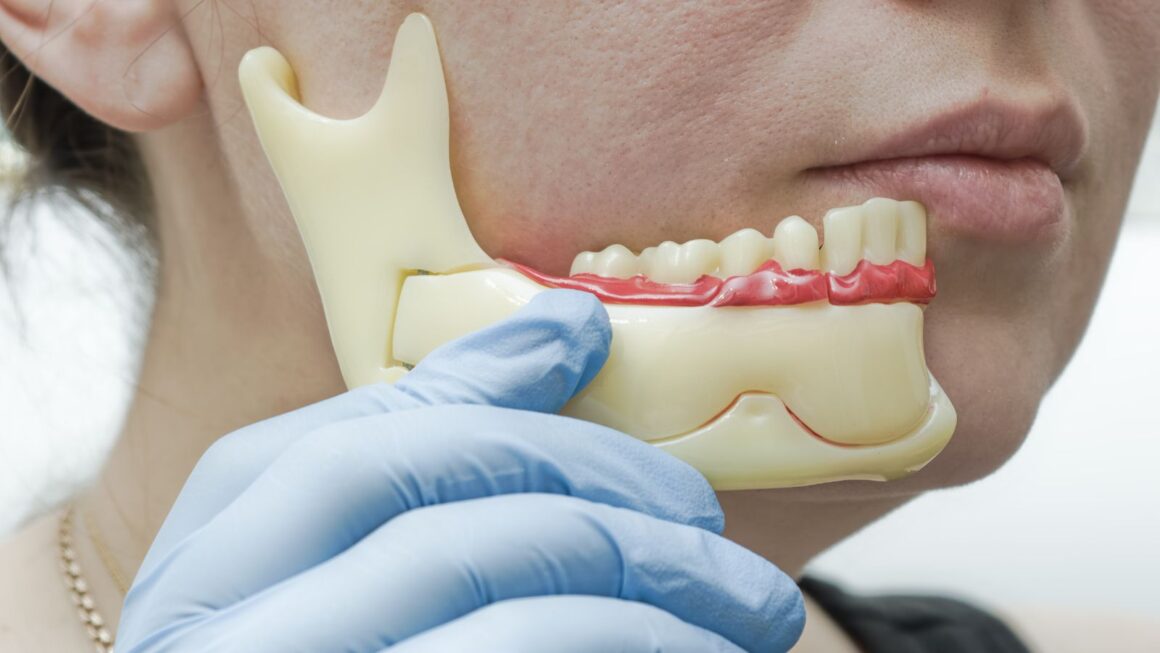
Losing a tooth doesn’t just leave a gap in your smile; it stops the stimulation your jawbone needs to stay strong, so your body starts breaking down that unused bone. Jawbone resorption is the gradual shrinking of bone where a tooth once sat, and it begins soon after tooth loss unless you take steps like implant placement or grafting to preserve the site.
You’ll learn why the jaw reacts this way, what signs and long-term consequences to watch for, and which treatments and timing matter most for keeping function and facial structure intact. This article will guide you through the causes, risks, and practical options to prevent or reverse bone loss so you can make informed decisions about your oral health, especially when working with an experienced dentist in Lyndhurst Ohio.
Understanding Jawbone Resorption
Jawbone resorption is the process where bone tissue in your jaw decreases in volume and density after the mechanical stimulation from a tooth is lost. This change affects chewing function, facial support, and future dental options like implants.
Definition of Jawbone Resorption
Jawbone resorption is the biological breakdown and removal of bone tissue in the maxilla or mandible. Osteoclasts, the cells that resorb bone, become more active than osteoblasts, the cells that form new bone, producing net bone loss.
You’ll typically see resorption when a tooth root no longer transmits forces to the surrounding alveolar bone. Without that stimulus, the body reduces bone mass in that localized area. Resorption can be gradual or relatively rapid in the months following tooth loss, depending on factors like age, systemic health, and local inflammation.
How Bone Loss Occurs in the Jaw
When a tooth is present, biting and chewing transfer mechanical load through the root into the alveolar bone. Those forces maintain bone density by stimulating bone formation. Remove the tooth, and the mechanical signaling declines sharply.
Biologically, reduced load triggers increased osteoclast activity and decreased osteoblast activity. If infection or periodontal disease is present, inflammatory cytokines accelerate bone breakdown. Denture wearers often experience additional resorption because soft-tissue pressure does not replicate the root’s focused stimulation.
Risk factors that speed loss include smoking, uncontrolled diabetes, long-term tooth absence, and certain medications. Early interventions — such as socket preservation grafts, timely implant placement, or maintaining oral hygiene to prevent infection — slow or limit the extent of resorption.
Normal Jawbone Structure and Function
Your jawbone comprises the alveolar process (which holds tooth sockets) and the basal bone (the underlying structural bone). The alveolar bone forms around roots and adapts throughout life in response to tooth movement and mechanical forces.
Functionally, the alveolar bone provides tooth support, transmits chewing forces, and helps maintain facial height and contour. Blood supply and a living cell population (osteoblasts and osteoclasts) allow continuous remodeling.
When teeth are present, the alveolar bone preserves its volume through cyclical remodeling tied to function. Lose that function, and the alveolar portion remodels downward and inward, often altering facial appearance and reducing the bone available for implants unless you take preventive or restorative measures.
Causes of Jawbone Resorption After Losing a Tooth
Jawbone resorption starts when the local environment changes after tooth loss. Mechanical, biological, and time-dependent factors all contribute to gradual bone loss at the extraction site.
Role of Tooth Roots in Bone Maintenance
Your tooth roots transmit chewing forces into the jawbone through the periodontal ligament. That mechanical stimulation signals osteoblasts to build and maintain bone where it’s needed. Without a root, that targeted stimulus disappears and the bone’s renewal shifts toward net breakdown.
The periodontal ligament also supplies blood and signaling molecules that support nearby bone cells. When you lose a tooth, those vascular and cellular inputs are reduced, so bone receives fewer growth and maintenance signals. This combination of lost mechanical load and reduced biology creates the initial vulnerability for resorption.
Bone Remodeling and Lack of Stimulation
Bone constantly remodels: osteoclasts remove old bone while osteoblasts lay down new bone. This balance depends on local demands. When a tooth is gone, the reduced functional load causes osteoclast activity to outpace osteoblast activity at that site.
Inflammation or infection after extraction can further accelerate osteoclast-driven loss. Systemic factors—age, smoking, osteoporosis, and certain medications—also tip the remodeling balance toward resorption. You can slow this process by restoring load (for example, with an implant) or by addressing local infection and systemic risk factors.
Progression of Bone Loss Over Time
Resorption begins quickly. You can lose a measurable amount of ridge width within months, and studies show much of the most rapid change happens in the first year. The rate then slows but continues progressively without intervention.
The pattern of loss is often greatest at the crest of the ridge and in the horizontal dimension, which can complicate future prosthetic or implant placement. Timely measures—socket preservation grafts, ridge augmentation, or implant placement—reduce the magnitude of loss and preserve options for later restorative work.
Consequences and Long-Term Effects
Jawbone resorption after tooth loss can reduce bone volume, change facial support, complicate future dental work, and alter how your teeth meet. The next paragraphs explain specific impacts on oral tissues, treatment options, and bite mechanics.
Impact on Oral Health and Facial Structure
When a tooth and its root are lost, the local bone no longer receives the mechanical stimulation that maintains density. Within months you can lose significant ridge height and width, and this continues over years if untreated.
Reduced bone height changes the support for overlying gums and soft tissues. You may notice deeper gum pockets, gum recession around adjacent teeth, and increased risk of periodontal disease in that area.
Loss of jawbone also affects facial contours. If multiple teeth are missing, you may see a collapse of the lower face, thinner lips, and increased wrinkles. These changes are most visible when posterior teeth are gone and the bite collapses inward.
Challenges for Dental Restorations
Less bone means fewer options and more complex planning for restorations. Implants require sufficient bone volume and density; when those are lacking, you may need grafting, sinus lifts, or alternative prostheses before implants are possible.
Bone grafting adds time, cost, and healing risks. Grafts can rebuild ridge height or width, but they require several months to integrate and may still fail in smokers or patients with uncontrolled diabetes.
Removable dentures sit on a shrinking ridge and become less stable over time. You may need frequent adjustments, relines, or a switch to implant‑retained overdentures to restore function and comfort.
Changes in Bite and Alignment
When a tooth is missing, neighboring teeth often drift into the empty space and opposing teeth may supraerupt. You can develop tilting, rotation, and migration that alter your occlusion within a year in many cases.
These positional changes can produce uneven chewing forces, accelerating wear on certain teeth and increasing fracture risk. You may also experience jaw joint strain, leading to muscle pain or temporomandibular joint (TMJ) symptoms.
Orthodontic treatment, restorative rebuilding, or a combination of both may be necessary to reestablish a stable bite. Planning often requires imaging and sometimes staged treatment to move teeth before placing definitive crowns or implants.
Preventing and Addressing Jawbone Resorption
Act promptly after losing a tooth to preserve bone volume, restore chewing function, and simplify later implant or prosthetic treatment. Options include replacing the tooth root with an implant, adding bone where it has been lost, and timing treatment to maximize predictable outcomes.
Dental Implants and Bone Preservation
Dental implants replace tooth roots with a titanium or zirconia fixture that integrates into your jawbone (osseointegration). This mechanical load stimulates bone remodeling and helps maintain bone height and width at the extraction site.
If you want to minimize long-term bone loss, consider placing an implant within weeks to months after extraction when anatomy allows. Immediate implants (placed at the same visit as extraction) can preserve socket contours but require careful case selection. Delayed implants (after healing) remain effective but may need grafting if significant resorption occurs. Your dentist will evaluate bone volume, gum health, and bite forces to recommend the right implant timing and size.
Bone Grafting Procedures
Bone grafts restore bone volume by placing autograft, allograft, xenograft, or synthetic materials into the deficient area. Grafts can be confined to the socket (socket preservation) or used for larger ridge augmentations.
Socket preservation at the time of extraction reduces vertical and horizontal collapse and often avoids more extensive surgery later. For moderate to severe loss, ridge augmentation or block grafting builds width and height for implant placement. Healing time varies—2 to 6 months is common—depending on graft type and your health. Your clinician may also use barrier membranes or growth factors to improve predictability. Know the graft material, expected healing timeline, and any additional procedures (sinus lift, soft-tissue graft) before consenting.
Importance of Timely Intervention
Delaying replacement increases the chance you’ll need more complex and costly procedures later. Bone resorption accelerates in the first six months after extraction, and ridge width can decrease significantly during that period.
Acting quickly preserves bone anatomy, reduces need for large grafts, and makes implant placement simpler with higher success rates. If you’ve already experienced resorption, ask your clinician for a CBCT scan to measure defect size and to plan staged reconstruction. Timely coordination between your surgeon and restorative dentist optimizes both function and esthetics.